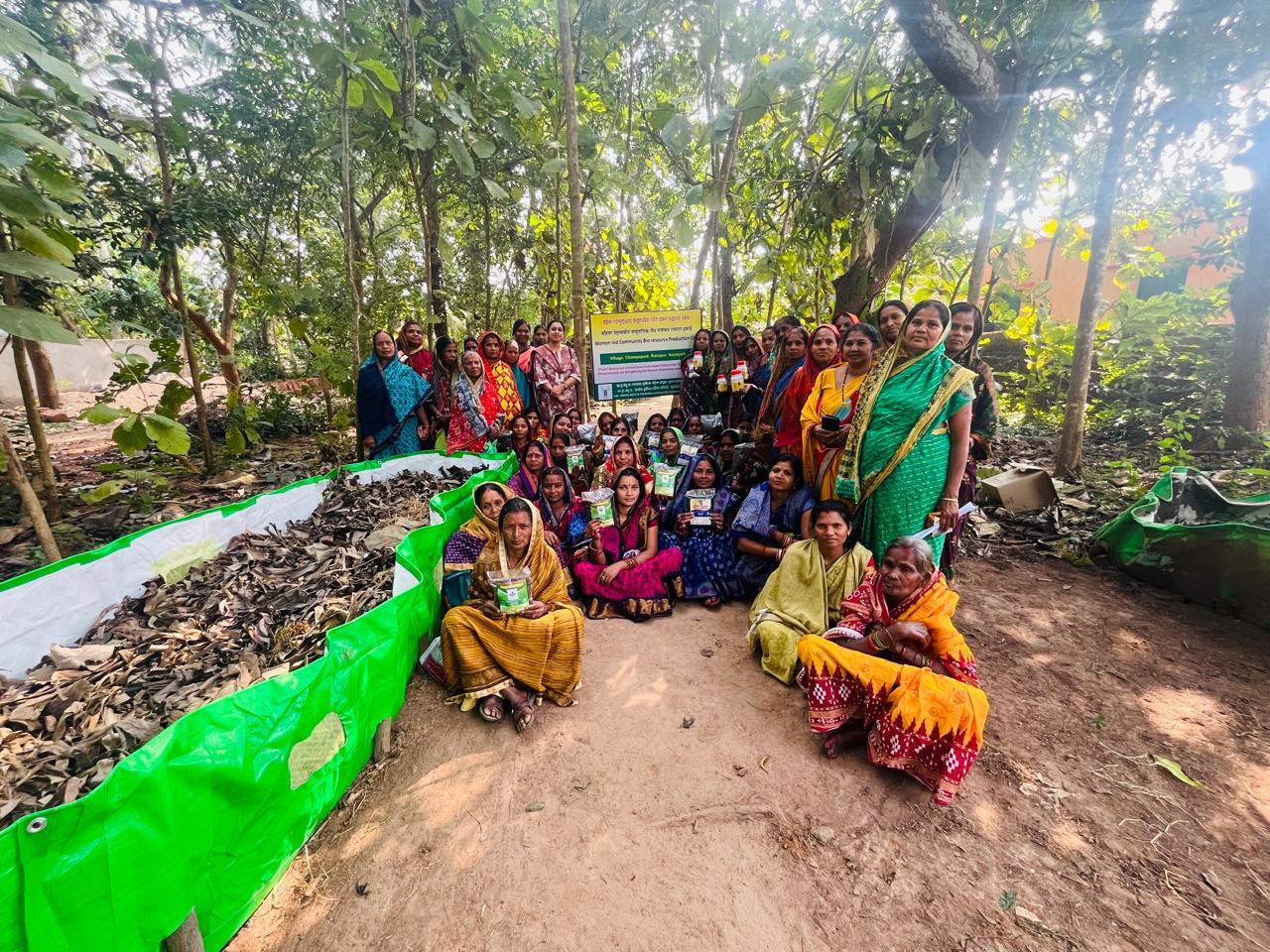
| ICAR-Central Institute for Women in Agriculture (ICAR-CIWA), Bhubaneswar, has taken a pioneering step towards empowering farm women by establishing a Women-led Bio-input Resource Production Unit at Champapedi in Ranapur block of Nayagarh district of Odisha. This initiative is part of the Institute’s continuous efforts to promote Natural and Organic farming practices while simultaneously strengthening women’s entrepreneurship and self-reliance in rural areas. The unit has been developed with the active participation of more than 50 farm women, who have come together to form a Farmers’ Interest Group (FIG) named ‘Ranapur Organics’ under the ongoing project ‘Development of Horticulture-based Chemical-free Farming Model for Entrepreneurship Development and Strengthening Self-Reliance among Farm Women’. Through this collective endeavor, the group aims to produce and supply a range of quality bio-inputs that are critical for sustainable farming. These include: Jeevamrut (a liquid bio-fertilizer prepared from cow-based products and natural ingredients), Ghanajeevamrut (a solid form of Jeevamrut for easy application), Mixed residue vermicompost (produced from farm residues for soil enrichment) and Handi Khata (an indigenous pot-based bio-formulation for plant protection). The establishment of this unit will address major challenges faced by farmers in the region, namely the timely and affordable availability of authentic bio-inputs. By ensuring a local and reliable supply, the initiative is expected to reduce farmers’ dependence on chemical inputs and encourage them to adopt natural farming practices more effectively. |
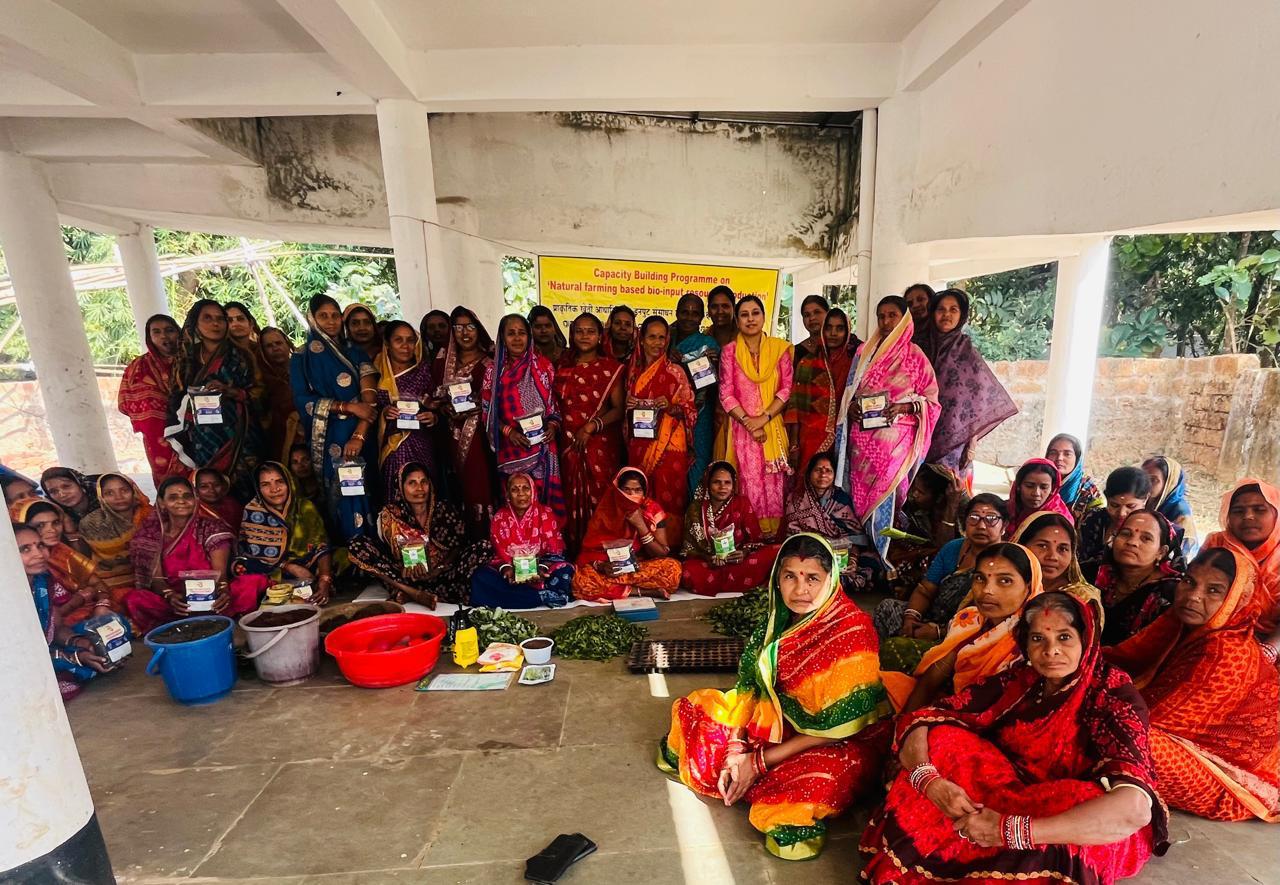
| To strengthen the capacities of women farmers, ICAR-CIWA also organized a three-day hands-on training and skill development programme on ‘Natural Farming-based Bio-input Resource Production’ from 27-29 November 2025 at the unit. The programme was coordinated by Dr. Ankita Sahu, Scientist, ICAR-CIWA, and focused on scientific methods of preparation, quality maintenance, packaging, and marketing strategies for bio-inputs. This initiative holds multiple benefits in terms of women Empowerment and entrepreneurship development as the unit will function as a model of ‘She-preneurship in Natural Farming’ in the rural ecosystem. The unit will also serve in a broader term towards sustainable farming and contribute to the vision of Atmanirbhar Krishi (self-reliant agriculture). |